
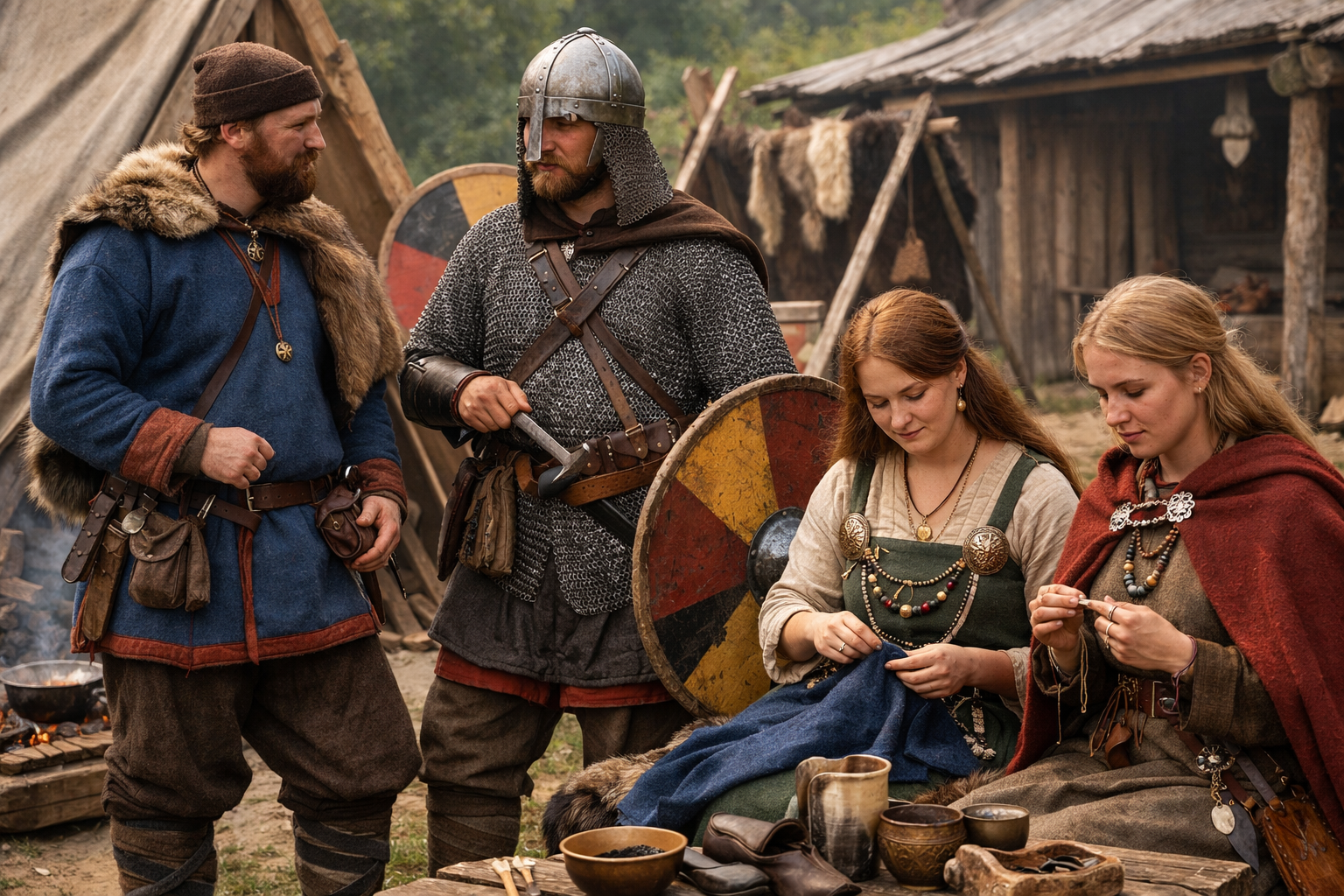
What Did Vikings Really Wear? A Historian’s Guide to Authentic Viking Clothing (750–1100 AD)
When most people picture Viking clothing, they imagine fur‑covered warriors in horned helmets — but the real Viking Age wardrobe was far more practical, colourful, and sophisticated. Thanks to archaeological finds from sites like Birka, Hedeby, and Gotland, we now have a clear picture of what Norse men and women actually wore between 750 and 1100 AD.
If you’re a reenactor, living‑history enthusiast, or simply curious about the real Viking world, this guide will walk you through the essentials of authentic Viking clothing — based on evidence, not Hollywood.
Natural Materials: Wool, Linen, Leather & Fur
Viking clothing was built for life in the North. That meant warm, durable, breathable materials:
- Wool — the backbone of Viking clothing. Used for tunics, trousers, cloaks, hoods, and leg wraps.
- Linen — ideal for under‑tunics, shirts, and dresses.
- Leather — belts, shoes, pouches, straps, and sometimes protective gear.
- Fur — used sparingly for warmth, not as everyday fashion.
These materials were chosen for practicality, comfort, and survival in harsh Scandinavian climates.
Viking Men’s Clothing
1. The Tunic
The basic garment for Viking men was a long‑sleeved wool tunic, usually thigh‑length. Colours ranged from natural browns and greys to dyed blues, greens, and reds.
2. Trousers
Men wore several styles depending on region and period:
- Straight‑leg trousers
- Baggy Rus‑style trousers
- Tapered trousers with leg wraps
Leg wraps (winigas) helped keep warmth in and protected the lower legs.
3. Cloaks
A rectangular wool cloak fastened with a brooch was essential for travel and cold weather. Cloaks were often undyed or naturally coloured, but wealthier Vikings used dyed wool.
4. Belts & Accessories
A Viking man’s belt was more than decoration — it held tools, knives, pouches, and sometimes small personal items.
Common accessories included:
- Leather belts with bronze or iron buckles
- Small utility knives
- Simple jewellery like arm rings or beads
Viking Women’s Clothing
1. The Linen Underdress
A long linen shift formed the base layer — comfortable, breathable, and easy to wash.
2. The Apron Dress (Hangerock)
The iconic Viking women’s garment: a wool apron dress held up by two brooches. Often decorated with:
- Woven trims
- Beads
- Tablet‑woven straps
3. Shawls & Cloaks
Women also wore wool cloaks or shawls for warmth, fastened with brooches or pins.
4. Jewellery
Viking women loved jewellery — not just for beauty, but as a sign of status.
Common finds include:
- Oval brooches
- Glass beads
- Silver or bronze pendants
- Arm rings and necklaces
Colours of the Viking Age
Contrary to popular belief, Vikings did not dress in dull browns. They used natural dyes to create:
- Blue (woad)
- Red (madder)
- Yellow (woad or weld)
- Green (over‑dyeing blue and yellow)
Bright colours were prized, especially among wealthier households.
Did Vikings Wear Armour?
Yes — but not every day.
For combat, Vikings used:
- Gambesons (padded armour)
- Chainmail (for the wealthy)
- Helmets (simple, practical, no horns)
- Round shields
Everyday clothing was practical and comfortable, not militaristic.
Footwear: Turnshoes & Practical Leatherwork
Viking shoes were made using the turnshoe method, stitched inside‑out and then flipped. They were flexible, comfortable, and ideal for long travel.
Boots, ankle shoes, and simple slip‑on styles all existed.
The Real Viking Look: Practical, Colourful, and Crafted to Last
The true Viking wardrobe was:
- Functional — built for work, travel, and harsh weather
- Colourful — dyed fabrics were common
- Layered — warmth mattered
- Decorated — trims, beads, and brooches showed status
- Crafted — everything was handmade with skill
Whether you’re building a reenactment kit or exploring Norse history, understanding authentic Viking clothing brings you closer to the real people behind the legends.