Viking Jewellery Symbolism Explained
Viking Jewellery Symbolism Explained: Meaning Behind Norse Adornments
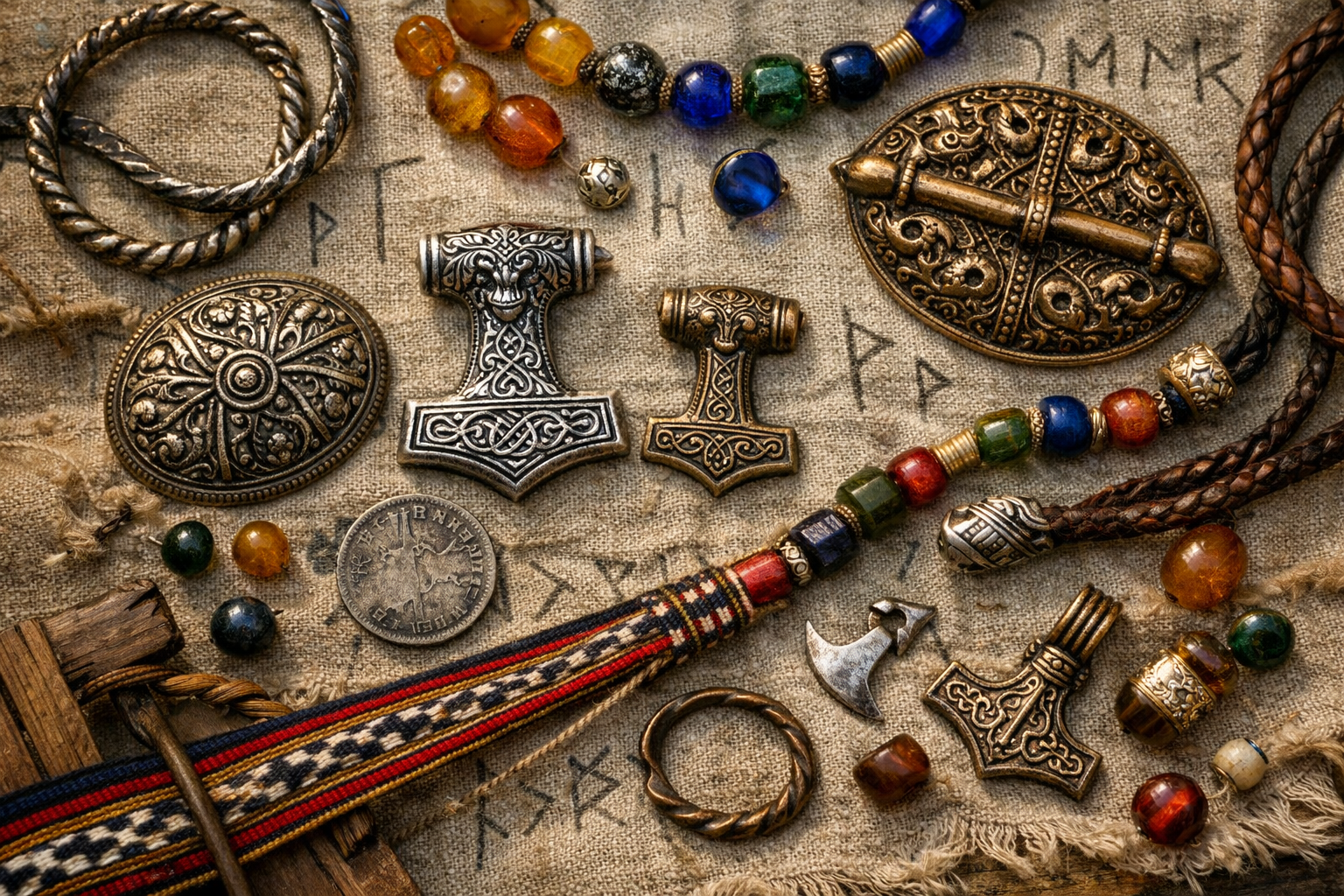
Viking jewellery was far more than decoration — it was a language of identity, faith, and power. Each pendant, brooch, and arm ring carried meaning rooted in Norse mythology and daily life. Archaeological finds from Birka, Hedeby, and Gotland reveal how Vikings used jewellery to express status, allegiance, and spirituality.
⚒️ Archaeological Foundations
Excavations across Scandinavia and Northern Europe have uncovered thousands of jewellery pieces dating from 800–1100 AD. Key sites include:
- Birka (Sweden): silver Thor’s hammers, ornate brooches, and bead necklaces found in both male and female graves.
- Hedeby (Germany): trade hub yielding imported silver, amber, and glass beads.
- Gotland (Sweden): hoards of arm rings and pendants showing advanced metalwork and symbolic motifs.
These finds confirm that jewellery was not only decorative but also a marker of wealth, faith, and cultural connection.
🔱 Common Viking Symbols and Their Meanings
- Mjölnir (Thor’s Hammer): Found across Scandinavia, often worn as a pendant. Symbolizes protection, strength, and resistance to Christian conversion.
- Valknut: Three interlocked triangles seen on rune stones and pendants. Represents connection to Odin and the afterlife; associated with warriors fallen in battle.
- Raven Motifs: Inspired by Odin’s ravens Huginn and Muninn. Signifies wisdom, foresight, and divine communication.
- Serpent and Dragon Designs: Common in brooches and arm rings. Denotes power, transformation, and guardianship.
- Sun Wheel / Swastika Variants: Pre‑Christian solar symbols. Associated with life, fertility, and cosmic balance.
- Animal Motifs (Wolf, Bear, Boar): Represented clan totems and personal traits. Symbolises courage, ferocity, and loyalty.
Each design reflected the wearer’s beliefs and social role — from warrior to trader to craftsperson.
💎 Materials and Craftsmanship
Viking jewellers worked with silver, bronze, iron, and gold, often using techniques like:
- Casting and hammering for arm rings and brooches
- Filigree and granulation for fine silverwork
- Glass bead making for colourful necklaces
- Amber carving for symbolic pendants
Imported materials such as Byzantine glass and Arabic silver coins found in Scandinavian hoards show how Viking jewellery also reflected global trade networks.
🧙♂️ Spiritual and Social Significance
Jewellery served multiple roles in Viking life:
- Spiritual: invoking protection from gods like Thor and Freyja.
- Social: displaying wealth and rank.
- Legal: arm rings were sometimes used to seal oaths or mark allegiance.
- Cultural: blending Norse and foreign influences through trade.
In Norse sagas, gifting jewellery symbolised loyalty and kinship — a tradition echoed in modern reenactment circles.
🪙 Famous Finds
- The Hiddensee Hoard (Germany): gold pendants and chains linked to royal families.
- The Silver Hoard of Gotland: hundreds of arm rings and coins buried for safekeeping.
- The Oseberg Burial (Norway): ornate brooches and bead strings belonging to high‑status women.
Each discovery deepens our understanding of Viking artistry and symbolism.
🔗 Further Reading & Museum Sources
Explore authentic research and collections:
- Swedish History Museum – Birka Finds
- National Museum of Denmark – Viking Jewellery Collection
- Schleswig‑Holstein Archaeological Museum – Hedeby Hoards
- British Museum – Viking Silver and Amber Artefacts
In Summary
Viking jewellery was a fusion of faith, art, and identity. Every pendant and arm ring told a story — of gods, journeys, and human connection. Wearing or recreating these pieces today continues that legacy, linking modern craftsmanship to the spirit of the North.