
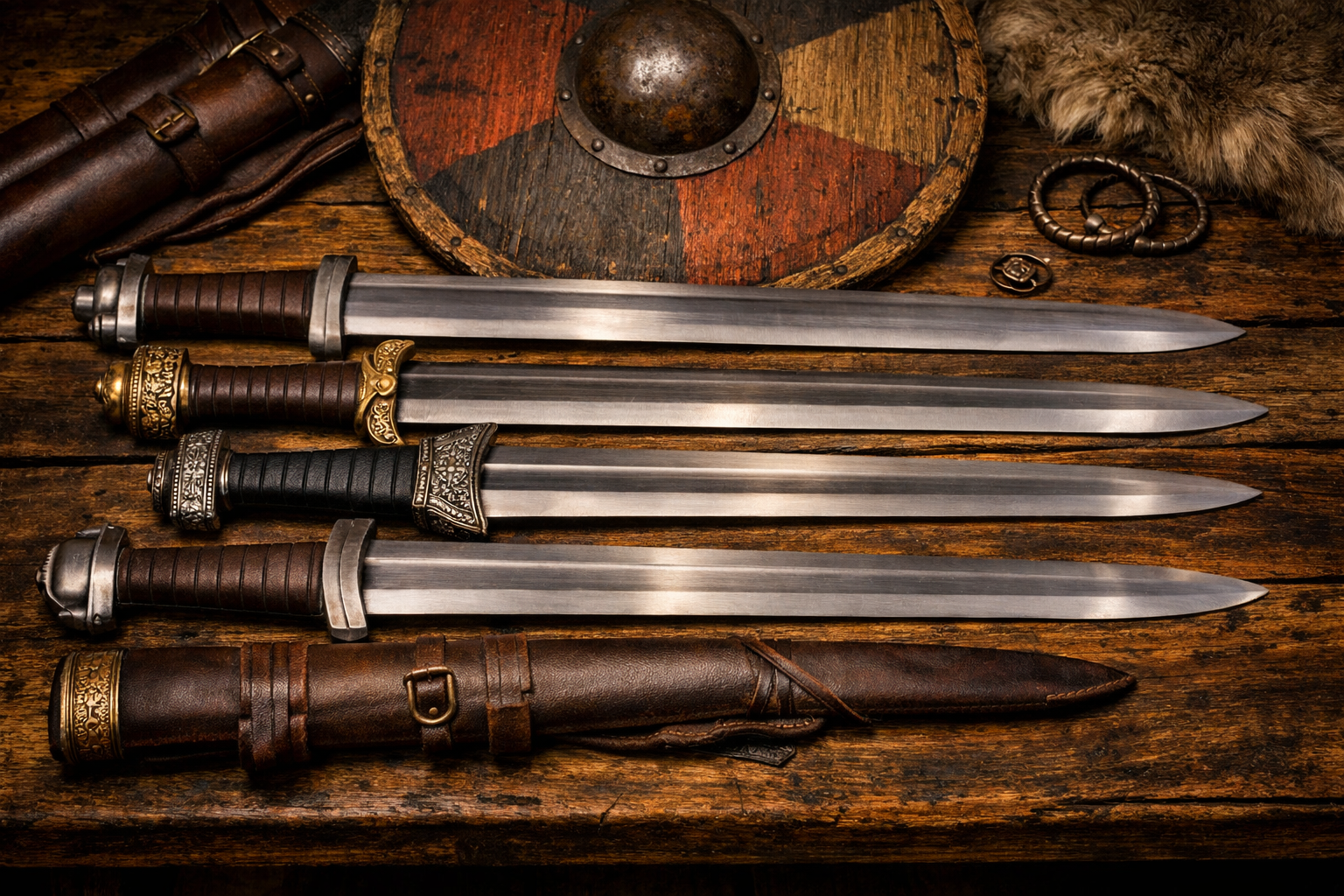
How to Choose a Viking Sword for Reenactment
⚔️ How to Choose a Viking Sword for Reenactment
The Viking sword is one of the most iconic weapons of the early medieval world — a symbol of honour, craftsmanship, and power. For reenactors, choosing the right sword means balancing historical accuracy, safety, and usability. This guide explores archaeological findings, typology, and practical advice to help you select the perfect blade for your Viking persona.
🪓 Historical Background
Viking swords evolved from late Iron Age designs and were used between 750 and 1100 AD. Archaeological finds across Scandinavia, Britain, and Eastern Europe reveal hundreds of examples, many classified under the Petersen typology, developed by Norwegian archaeologist Jan Petersen in 1919.
Key Archaeological Sites
- Birka (Sweden): richly decorated swords with silver and bronze inlays.
- Hedeby (Germany): trade‑era blades showing Frankish influence.
- Kaupang (Norway): everyday swords with simpler hilts and iron guards.
- Ulfberht blades (Germany/France): high‑carbon steel swords marked with the famous +VLFBERH+ inscription — prized across Europe.
These finds show that Viking swords were not crude weapons but masterpieces of metallurgy and design.
⚒️ Understanding Sword Types
- Type H (9th century): Straight guard, lobed pommel; common Scandinavian style
- Type K (9th–10th century): Curved guard, heavy pommel; found in Norway and Denmark
- Type S (10th century): Broad blade, ornate hilt; often ceremonial or high‑status
- Type X (10th–11th century): Transitional to medieval knightly swords; slimmer, longer blade
For reenactment, Type H or K swords are most practical — balanced, historically accurate, and widely represented in finds.
🧠 Choosing the Right Sword for Reenactment
1. Material and Construction
- Blunt steel blades are essential for safety.
- Full‑tang construction ensures durability.
- Tempered carbon steel (EN45 or 1060) offers strength and flexibility.
Avoid stainless steel — it’s too brittle for combat reenactment.
2. Weight and Balance
Authentic Viking swords weigh between 1.1 – 1.5 kg with a balance point near the guard. A well‑balanced sword feels agile, not heavy.
3. Grip and Pommel
Choose a short, one‑handed grip wrapped in leather or cord. Pommel shape should match your chosen typology — lobed, trilobate, or disc.
4. Scabbard and Belt
A historically accurate wood‑and‑leather scabbard completes the look. Many finds show suspension systems using two straps or rings for angled carry.
5. Safety Standards
For live combat reenactment, ensure your sword meets HEMA or reenactment safety standards — rounded tip, 2–3 mm edge thickness, and secure hilt fittings.
🧭 Historical Inspiration
- The Gjermundbu Sword (Norway): found with the only complete Viking helmet, dating to the 10th century.
- The Langeid Sword (Norway): richly decorated with silver and gold, possibly ceremonial.
- The Ballinderry Sword (Ireland): a fine example of Norse craftsmanship in the British Isles.
Each of these swords reflects the artistry and symbolism of Viking warriors — blending practicality with prestige.
🔗 Further Reading & Museum Sources
Explore authentic research and collections:
- National Museum of Denmark – Viking Weapons Collection
- Swedish History Museum – Birka Finds
- British Museum – Viking Age Artefacts
- University of Oslo – Gjermundbu and Langeid Studies
In Summary
A Viking sword is more than a weapon — it’s a statement of identity. When choosing yours, look for historical accuracy, balance, and craftsmanship. Whether you’re portraying a warrior, trader, or noble, the right sword connects you directly to the spirit of the Viking Age.