History of Tablet‑Woven Belts
History of Tablet‑Woven Belts: Threads of Viking Craftsmanship
Tablet weaving — also known as card weaving — is one of the oldest textile techniques in Northern Europe. Long before industrial looms, Viking and early medieval artisans used small square tablets to create strong, decorative bands that served as belts, trims, and straps. These woven treasures were not only practical but also carried deep cultural meaning.
🧶 Origins and Archaeological Evidence
Archaeologists have uncovered tablet‑woven fragments across Scandinavia and the British Isles, dating from the 6th to 11th centuries. Notable finds include:
- Birka (Sweden): richly patterned wool bands found in graves, often near brooches or belt fittings.
- Oseberg (Norway): preserved textiles showing advanced tablet‑weaving techniques with complex geometric motifs.
- Hedeby (Germany): fragments of silk and wool bands, suggesting trade connections and high‑status garments.
These finds reveal that tablet‑woven belts were not mere accessories — they were symbols of craftsmanship, wealth, and identity.
🪡 Technique and Materials
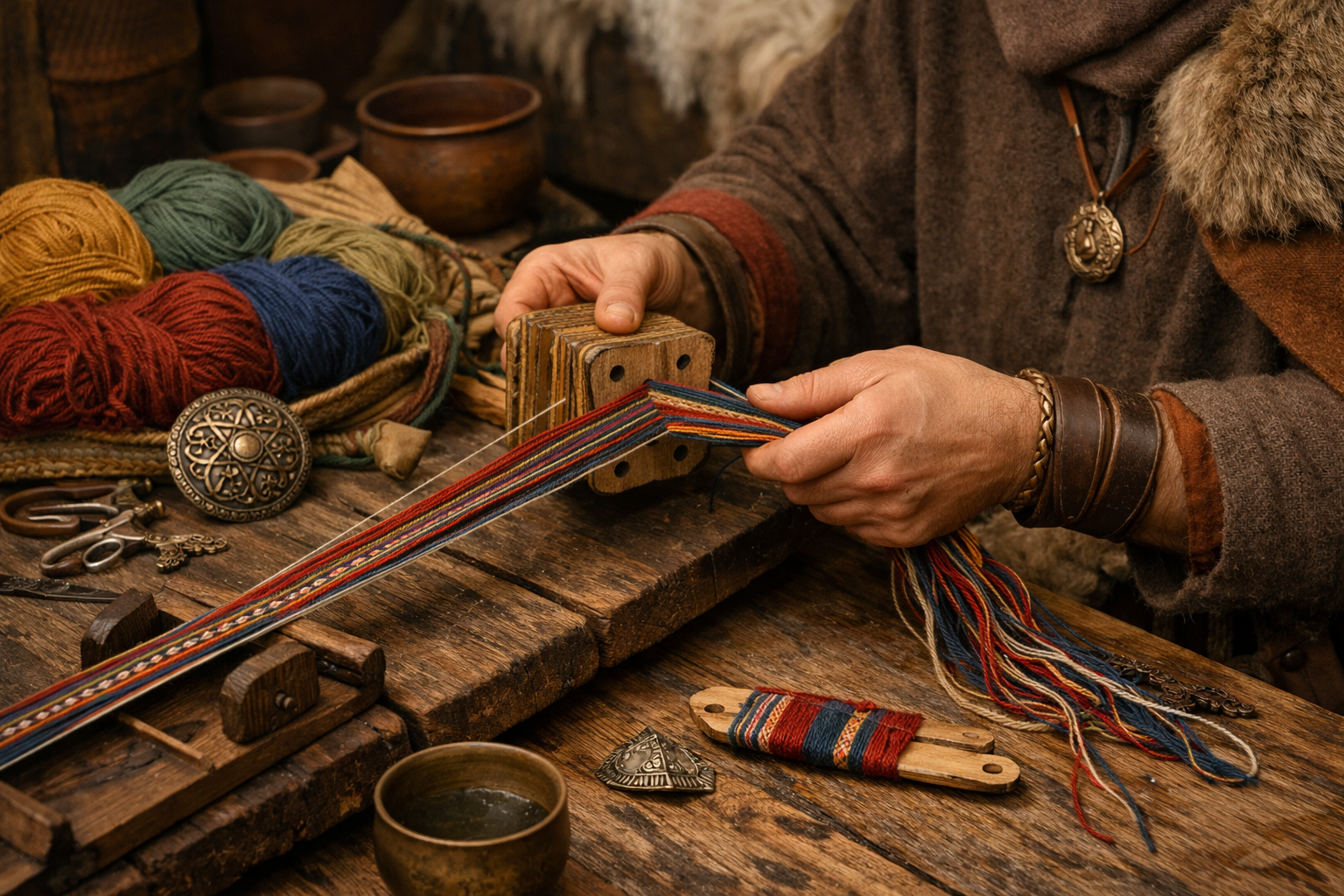
Tablet weaving uses a set of square cards with holes through which threads are passed. By rotating the cards, the weaver creates intricate patterns and durable, flexible bands.
Typical Viking‑Age materials:
- Wool: the most common fibre, dyed with natural pigments like madder (red) and woad (blue).
- Linen: used for lighter, finer bands.
- Silk: rare and imported, reserved for elite garments.
Patterns ranged from simple stripes to elaborate diamond and knotwork designs — motifs that echo Norse art found on wood carvings and metalwork.
⚔️ Function and Symbolism
Tablet‑woven belts served both practical and decorative purposes:
- Practical: securing tunics, carrying pouches, knives, and tools.
- Decorative: displaying colour, pattern, and status.
- Symbolic: geometric motifs often represented protection, continuity, and connection to Norse cosmology.
In Viking society, a well‑made belt was a mark of pride — much like a warrior’s sword or a woman’s brooches.
🌈 Colours and Dyes
Viking weavers used natural dyes extracted from plants and minerals:
Colour Source and Symbolism:
Green: Over-dyed woad and weld, symbolizing renewal and nature.
Red: Madder root, representing strength and vitality.
Blue: Woad, symbolizing loyalty and calm.
Yellow: Weld, associated with prosperity.
These hues added vibrancy to everyday clothing and reflected the wearer’s social standing.
🧭 Tablet Weaving Today
Modern reenactors and textile artists continue this tradition using authentic techniques. Reenactment belts often replicate patterns found in Birka and Oseberg, maintaining historical accuracy while celebrating Norse artistry.
If you’re crafting or buying a belt for your Viking kit, look for:
- Hand‑woven wool or linen
- Period‑accurate patterns
- Natural dyes
- Durable weave tension
These details ensure your belt is not just decorative but historically faithful.
🔗 Further Reading & Resources
For those eager to explore more:
- Birka Textiles – Swedish History Museum archives
- Oseberg Ship Burial Textiles – Oslo University research papers
- Hedeby Textile Finds – Schleswig‑Holstein Archaeological Museum
In Summary
Tablet‑woven belts are more than accessories — they are woven stories of the Viking Age, connecting us to the artistry and identity of Norse culture. Every twist of thread echoes centuries of craftsmanship, trade, and tradition.