Medieval Festival Clothing: Authentic Viking Age Outfits for Reenactment & Living History
Medieval festival clothing
Viking Age Festival Clothing Overview
Medieval festivals are the perfect place to bring Viking Age clothing to life. Whether you’re a reenactor, a LARPer, or simply someone who loves historical fashion, Viking garments offer a blend of practicality, beauty and cultural meaning. Every layer, stitch and accessory reflects the craftsmanship and traditions of early medieval Scandinavia.
Layers and Materials
Viking clothing was built around natural fibres. Linen formed the base layer, keeping the wearer cool and comfortable, while wool provided warmth and structure. These materials were durable, breathable and ideal for long days at festivals or reenactment events.ers and Materials
Common Garments
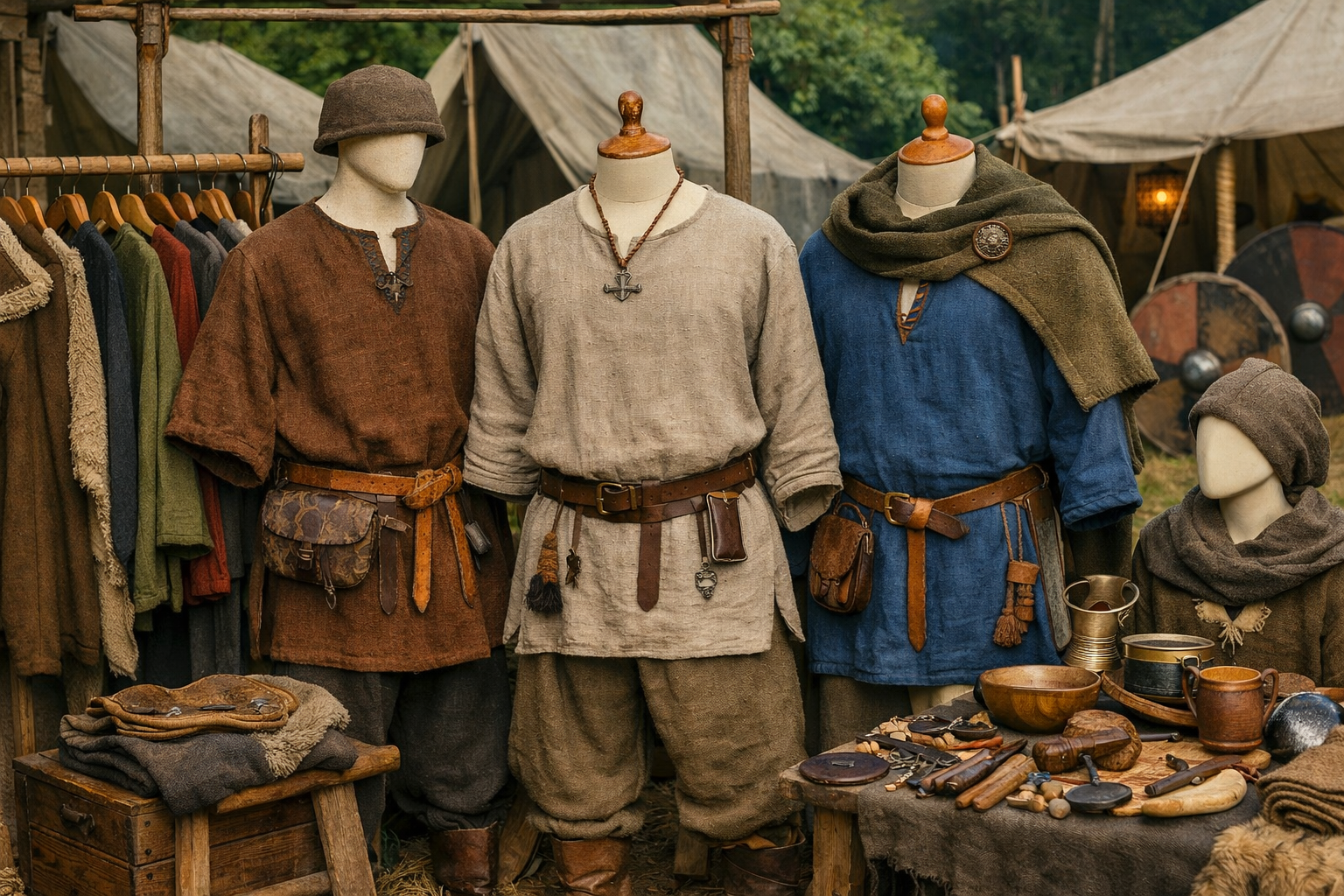
- Men: Tunics, trousers, cloaks, belts
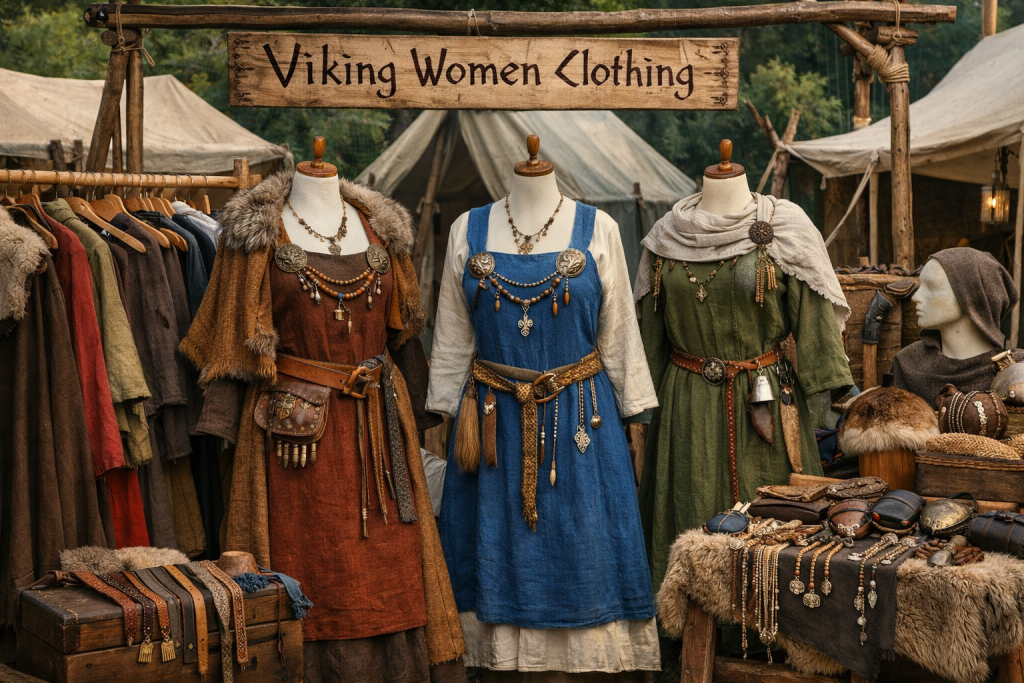
- Women: Kirtles, apron dresses, shawls
- Both: Hoods, cloaks, leg wraps, belts
If you want to explore handmade garments, visit our Viking Clothing section in the shop.
Colours and Natural Dyes
Viking clothing wasn’t dull — it was colourful. Natural dyes such as madder, woad, weld and walnut created rich reds, blues, yellows and browns. These colours varied depending on region, trade access and social status.
Bright colours were prized, especially for festivals and gatherings. A well‑dyed tunic or kirtle showed skill, wealth and pride.
Craftsmanship and Decorative Details
Decoration was subtle but meaningful. Tablet‑woven trims, hand‑stitched seams and embroidered motifs added personality to garments. These details were not only beautiful but also reinforced edges and strengthened clothing.
If you’re interested in trims, see our Tablet‑Woven Belts and accessories.
Accessories and Footwear
No Viking outfit is complete without accessories. Brooches, beads, pendants and belts were essential for both function and style.
Key Accessories
- Oval brooches for fastening apron dresses
- Glass beads for necklaces
- Leather belts with metal fittings
- Cloak pins
- Simple leather shoes or turnshoes
You can explore handmade pieces in our Viking Jewellery and Accessories sections.
Bringing Viking Clothing to Modern Festivals
Wearing Viking Age clothing at medieval festivals is more than dressing up — it’s a way to connect with history. Each garment tells a story of craftsmanship, culture and identity. Whether you’re performing, trading, or simply enjoying the atmosphere, an authentic Viking outfit helps you step into the past with confidence.
If you need custom‑made garments or unique accessories, we also offer Custom Orders tailored to your reenactment needs.